Understanding User Needs: What Is It and Why Should It Be Done?
User research aims to discover frustrations or barriers users face while interacting with a product/service. As a discipline, user research methodology focuses on understanding the behavior and needs of the product user through various techniques such as direct observation, surveys, and task analysis.
This stage is beneficial throughout the entire product design process, from ideation to market launch.
What is the Main Objective of User Research?
By humanizing the data collected about users, designers and researchers can identify specific issues users face while using a product/service and transform them into useful information. Placing the user at the center (HCD – Human-Centered Design), designers can create a user-oriented experience, increasing the likelihood of user retention on a site or using a product/service.
“Empathy is at the heart of design. Without an understanding of what others see, feel, and experience, design is a useless task,” says Tim Brown, CEO of the innovation and design firm IDEO. The type of user research you need to conduct depends on the reason for conducting the research. Below are three valid reasons to engage in this user research process:
- To create models that are truly relevant to users;
- To generate models that are easy and enjoyable to use;
- To understand the return on investment in UX Design.
What are the User Research Methods?
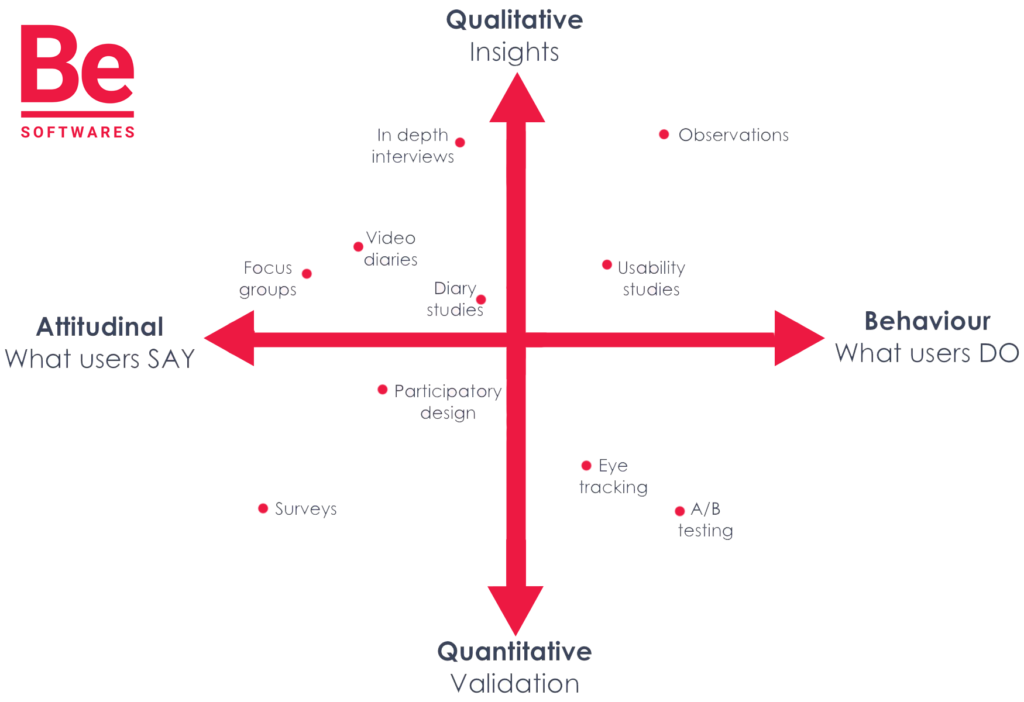
UX practitioners can use a wide range of research methods, but the most well-known are qualitative and quantitative research.
Qualitative Method includes the following actions:
- User interviews, where users are asked about their experience with the respective product/service;
- Usability testing, specifically testing a product by individuals representing the target audience;
- Contextual inquiry by observing how users interact with a product/service;
- Focus groups by inviting a small group of people from the target audience to discuss perceptions, opinions, beliefs, and attitudes towards the product/service.
Quantitative Method includes the following actions:
- Surveys: questionnaires gather a large volume of responses that can open up opportunities for user analysis;
- Product analysis: user data from product usage can provide valuable insights into development.
The user research methods you choose will depend on the type of product/service you want to create and the resources available. Therefore, before starting any of the two research methods, it is vital to include the key objectives you want to achieve.