


Agile vs Waterfall
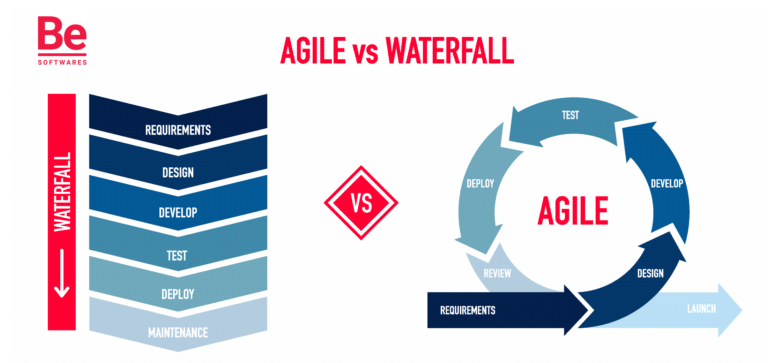
Agile is one of the most widely used and recognized software development frameworks in the world.
It was born when 17 individuals with different software development methodologies came together to brainstorm for a possible alternative solution to the existing software development method, with the goal of making it faster and less cumbersome in documentation.
The waterfall technique was too cumbersome, and there was no provision for feedback until the final product was ready for delivery. This meant no corrective possibilities during the process, and the client had no visibility of progress until the entire product was finished. Experts wanted to avoid this.
They sought a solution that allowed constant feedback to avoid the cost of rework in a later stage.
Unlike the classic waterfall method, where teams complete one full step before moving on to the next, Agile means continuous adaptation and improvement based on constant feedback and faster delivery speed.
There are various Agile methodologies practiced in diverse industries, but the most common ones are Scrum, Kanban, and Extreme Programming.
Advantages of Agile Methodology
- Customers continuously receive information about the project’s progress at the end of each iteration/sprint.
- Each sprint provides the client with a functional software portion that meets their expectations, according to the defined work provided by them.
- Development teams respond well to changing requirements and can make changes even in advanced stages of development.
- There is constant two-way communication, keeping clients involved, ensuring all stakeholders have clear visibility of the project’s progress.
- Product design is efficient and meets business requirements.
Disadvantages of Agile Methodology
- Comprehensive documentation is not preferred, which can lead to agile teams misinterpreting this, as Agile does not require documentation. So, rigor is lost in documentation. This should be avoided by continuously questioning if there is enough information to proceed or not.
- Sometimes, at the beginning of projects, requirements are not clear. Teams might proceed and discover that the client’s vision has been realigned, and in such situations, teams need to incorporate many changes, and it’s difficult to assess the final outcome.
- Written by: BeSoftwares
- Posted on: August 16, 2021
- Tags: Agile methodology, Mobile Development, Scrum, Web Development